


Recovery of the Cuban National Electric System: Round table with Minister of Energy and Mines Vicente de la O Levy
- The Left Chapter

- Apr 24
- 6 min read
A look at strides made in 2025 and plans for 2026 and forward in spite of the intensified US blockade.
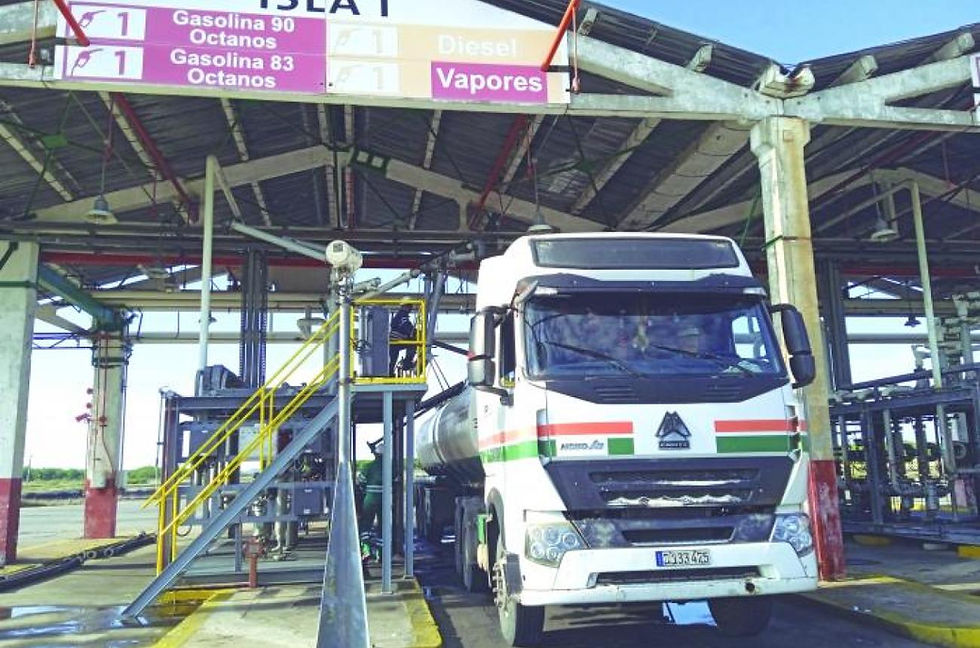
Image via the PCC
By Wennys Díaz Ballaga and Carmen Maturell Senon, translated from the Spanish
By the end of 2025, Cuba had made notable strides in restoring the National Electric System, even as the U.S. blockade tightened, culminating in the December seizure of a ship carrying one million barrels of fuel.
According to the Minister of Energy and Mines Vicente de la O Levy, who spoke at a recent round table, the country rolled out a comprehensive plan: over 1,000 megawatts (MW) of distributed generation were restored, national gas production was boosted, major thermoelectric units were repaired, and renewable energy use surged from 3% to 10% in just one year.
He mentioned that the effects are ongoing and that 2026 will be dedicated to building on what’s been accomplished, introducing energy storage systems, and expanding the manufactured gas service.
What was the starting point of the energy recovery programme and what concrete results were obtained in 2025?
We started from a very complex situation. At the end of 2024, distributed generation barely had about 350 MW of the almost 3,000 installed, due to a lack of parts and financing. In 2025, we restored it to over 1,000 MW, which proved crucial during the cyclone that hit the provinces of Granma, Guantánamo, Holguín, and Las Tunas, as they were cut off from the national grid and relied on that generation.
We also recovered thermal units such as Céspedes 3 and 4 and Renté 5 in Santiago de Cuba. Céspedes unit 4 was delayed due to planning and quality errors in maintenance, but it is already online.
What role did national gas and renewable energies play?
It was one of the most significant leaps. We drilled new wells and boosted the production of the associated gas. We generated 370 MW of an installed capacity of 380 MW, with a stable average of 340, running on our own fuel. As for renewables, we started 2025 with 3% penetration and ended it with 10%, an increase of seven percentage points in a single year.
How did the energy blockade imposed by the U.S. impact Cuba as of January 29?
It was brutal. The last ship entered on December 8 and we did not receive more until the Russian ship with 100,000 tons. As of January 29, the possibilities of acquiring fuel were blocked due to tariff issues and the military presence in the Caribbean. Now there is talk of sanctions against entire countries, which discourages any supply.
This paralyzed everything reliant on imported fuel: Mariel, Moa, and Havana’s patanas. For months, we’ve relied solely on our thermoelectric plants, gas, and solar power. If we take 2,000 MW of unavailability and subtract 1,400, we’re left with 600 MW; with fuel, the improvement would have been remarkable.
Were decisions taken to protect the economy despite the blackouts?
Yes. It was decided to prioritize vital sectors such as agriculture, food production, and industries that generate foreign exchange. We safeguarded 631 electrical circuits nationwide, requiring over 800 MW, and they were only impacted under extreme conditions. This made it possible to irrigate tobacco, corn, and soybeans, while also keeping export industries going. There were more hours of blackout than expected because we allocated part of the energy to production. We could not continue with factories stopped.
What is the program for 2026 and what news does it bring?
The Government Program has 62 actions detailed month by month, evaluated weekly. In 2026 it is not only about growing, but also about consolidating and sustaining what has been recovered. Today we have 1,114 MW of distributed generation available. We will continue to increase gas and oil production – we have already stopped the decline and production is growing.
The great novelty is the incorporation of energy storage systems: the resources are already in Cuba in the installation phase. We also resumed the program of manufactured gas for cooking in Havana, which had been stopped due to a lack of gas. The goal is to add 25,000 new customers, which reduces electricity demand.
The priority is to sustain the thermoelectric plants with Cuban crude, because without that fuel we would be in total blackout.
We buy crude oil and not derivatives because it is more economically viable: from it we obtain gasoline, fuel, diesel and LPG. Importing each product separately makes freight and external refining more expensive.
Not all refined fuel goes to electricity; Part of the diesel and fuel oil (about 6,000 tonnes) is used in hospitals, generators and transport. The liquefied gas will go to hospitals with gas boilers and food production centers.
The Russian ship was unable to dock at Cienfuegos because of draft issues, so it was unloaded over 90 hours at a different port. The cargo was then transferred via cabotage to smaller vessels, and refining commenced.
What is the main logistical challenge and when did you notice improvement?
The tanks are empty. Any time we put 1,800 tonnes of diesel on the road each day, it gets used up right away. Taking it to the far ends of the country means that when it arrives on one side, the other no longer has it. We decided to keep minimal inventories so we can launch everything simultaneously. The fuel is shipped to Mariel and Moa with 24-hour logistics in place.
The improvement since April 17 has been noticeable—significant, though not quite what we hoped for. We’re distributing 800 tons per day out of the 1,600 tons needed. If we used the full 1,600, blackouts would be less frequent but it would last only half as long. This shipment will carry us through to the end of April, and we’re making plans to keep things running smoothly after that.
What causes the disparity in blackouts among provinces, and can unexpected events be anticipated?
No two provinces are the same electrically.In theory, the formula is fair, but if a province has more essential services, it ends up with fewer circuits to switch off, leaving its population more affected.
We make plans at midnight, but then something happens—Mariel or another thermal plant goes offline, the sun shifts, or sargassum shows up and clogs the Energás intakes, causing problems. Nobody plans for sargassum or the unexpected shutdown of a thermoelectric plant due to a breakdown.
What does solar energy lack for stability, and what is the goal of the energy transition?
It lacks batteries. Solar fluctuates, which generates variations in frequency, voltage and consumption. The batteries stabilize this. Cuba has four large sites generating a combined total of 200 MW, on the way to reaching 3,000 MW of renewable energy. The batteries are already in the country.
The initial 50 MW site will pave the way for completing over 900 MW in total. The aim of the energy transition is to ensure independence for all energy sources. Not just wind farms—restore the 7,827 windmills (with 5,673 already in working order), implement solar pumping for livestock and hydraulic systems, and revive the 409 biogas plants (only 124 currently operational).
What concrete solutions have been implemented with scarce funding?
We purchased 15,000 Ecoflow-type solar units, modified to charge exclusively using sunlight. They were delivered to teachers, doctors, labor heroes, and children dependent on electricity (171 at first, followed by 263 more).Additionally, 5,000 solar systems were allocated to polyclinics, maternity homes, nursing homes, funeral homes, banks, Electric Union offices, radio stations, and ETECSA.
What progress has been made in the energy transition?
The transition is advancing on several fronts. Today there is 15% penetration of renewable energies if combine that the private sector, state-owned companies and organizations do. In total we’re adding around 1,700 MW through a mix of generation and savings by using renewable sources to pump water. Some companies have fully covered their workers' energy needs using their own budgets. The private sector has also stepped in, funding street lighting along Havana’s avenues.
What are the steps towards achieving complete energy independence?
The first stage is to reach 24% renewable energy by 2030. The second is to reach 40% by 2035, which would allow us to eliminate fuel imports, saving more than one million tons per year. The third stage, by 2050, is total sovereignty with 100% renewable energy. Cuba has enormous potential in forestry, hydraulic, wind, and even tidal biomass. This year, we started installing the towers for the Herradura 1 wind farm.
This work was translated and shared via a License CC-BY-NC


Comments