


Cuba's Hermanos Martínez Tamayo Pre-University Institute: A Distinctive, Innovative, and Demanding Educational Model
- The Left Chapter

- Jun 6
- 3 min read
Cuban President Miguel Díaz-Canel Bermúdez visited the Hermanos Martínez Tamayo Vocational Pre-University Institute of the Ministry of the Interior on Thursday, accompanied by the Minister of the Interior and member of the Political Bureau of the PCC, Army Corps General Lázaro Alberto Álvarez Casas.

Images via Estudios Revolución
By Leticia Martínez Hernández, translated from the Spanish
The First Secretary of the Central Committee of the Communist Party of Cuba and President of the Republic, Miguel Díaz-Canel Bermúdez, described the work being done at the Hermanos Martínez Tamayo Vocational Pre-University Institute of the Ministry of the Interior (Minint) as "a distinct, innovative, and demanding educational model." He visited the institution this Thursday along with the Minister of the Interior and member of the Political Bureau, Army Corps General Lázaro Alberto Álvarez Casas.
In an emotional dialogue with students, graduates, directors, and professors at the school—the only one of its kind in the country, located in the capital’s Playa municipality—the Head of State spoke about the well-rounded education its students receive: "as Fidel always asked when he developed the first concepts of the Battle of Ideas."

Díaz-Canel said he was impressed "by what you have been doing, especially because you have sustained it for years, even during these difficult times that have affected and impacted educational activity so much."
"I believe that the Ministry of the Interior, in addition to the merits and recognition it has received from our people, should also be proud to have an institution like this," he stated.
Regarding the school—always beautiful, clean, orderly, and well-painted— he said that these are the kinds of environments one should aim for in an educational center: "because education is not achieved solely through knowledge of a curriculum or a subject, but rather has many components that influence, nurture, and nourish the spirit."
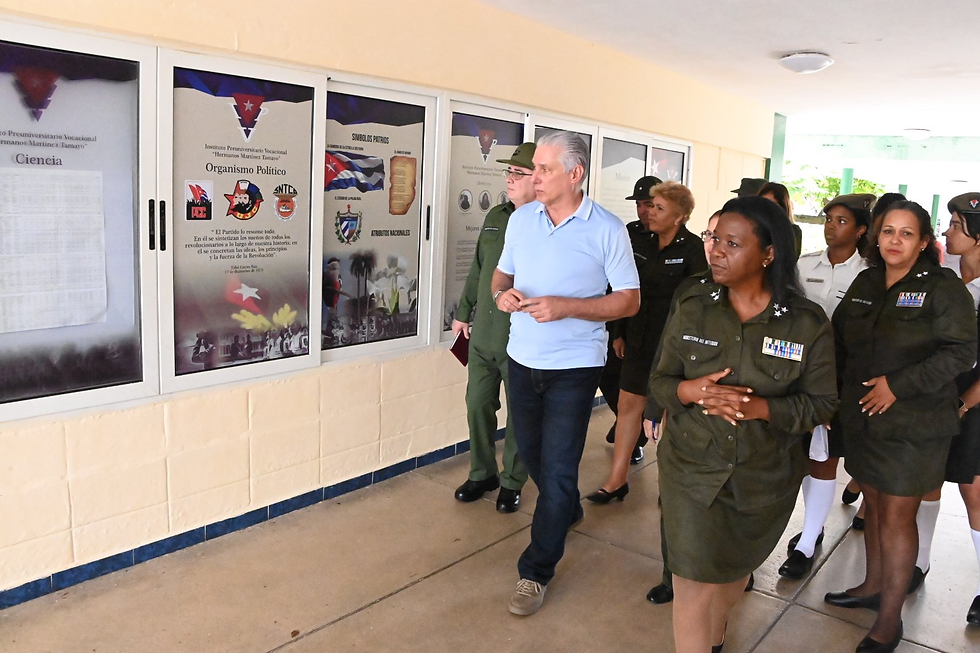
Before visiting the school's classrooms and laboratories, the President spoke about the value of embracing critical thinking, pursuing a well-rounded education to navigate life, and nurturing a spirit of revolutionary commitment by being good Cuban citizens and contributing our abilities to the process of building socialism in the country.
After listening to the students' life stories, the graduates' experiences and motivations, and the professors' reflections on the teaching process, Díaz-Canel emphasized that in complex times like those the country is experiencing, with daily aggression from the empire, "talking with you, seeing your willingness, your commitment, your training, and the way you express yourselves, also reaffirms the feelings of appreciation one has for this institution." This strengthens us greatly and energizes us, he stressed.

He invited them to join the Community Youth Network, a new initiative by Cuban youth for working in neighborhoods, and also asked them to "study hard, delve deeper, explore history and science, because that will give you the tools, the arguments, the knowledge to develop your own thinking, a critical understanding of everything that happens around you, so that you can make truly coherent decisions."
During a conversation with students, where they also discussed the harsh reality the nation faces due to the suffocating policies of the United States government, it was revealed that the Cuban President’s visit was in response to a request from a pre-university student during a previous event where they had met.
A SCHOOL THAT CONTRIBUTES
In statements to the press, Colonel Vivian Sabuquet Larrondo, director of the Minint preparatory school—as this institution is popularly known—explained that it "has an important mission: to train the future officers and personnel of the Minint, a mission we have been fulfilling for over 22 years. We have graduated more than 4,000 young people."
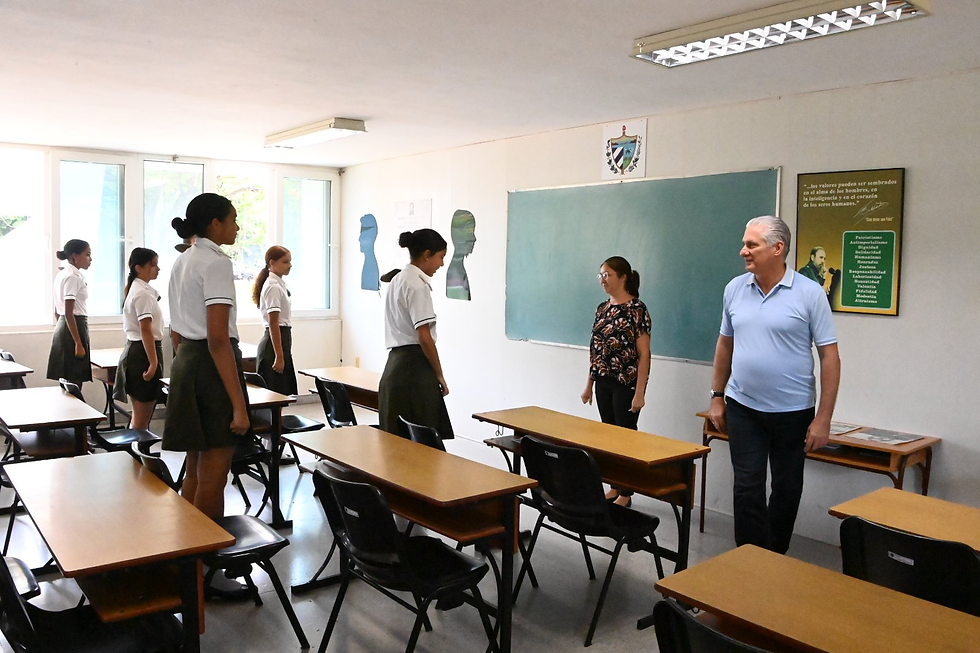
Many of them, she added, are now working at the Minint, and other graduates have the option of entering civilian universities. "I think the most important thing is the contribution we have made, not only to the Ministry of the Interior, but also to society."
Sabuquet Larrondo explained that the students leave the school with a well-rounded education, not only in patriotic and military training, but also because "we develop activities in physical education, culture, many sports that the students enjoy, and we also cover technological and scientific development."
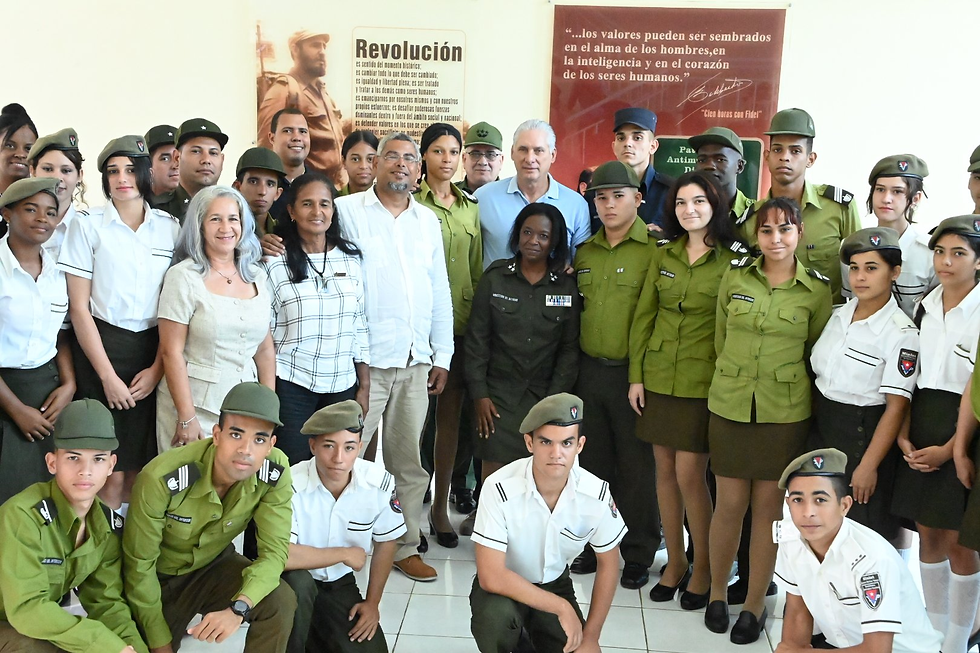
Students arrive at the school between the ages of 14 and 15, graduate at 17, and benefit from the positive influence of their teachers, who are highly experienced not only in their subjects but also in their sensitivity and values, she noted.
They develop habits of coexistence, discipline, and a strong work ethic, the director noted, while also embracing values like solidarity, humanism, patriotism, and more, all with the invaluable support of their families.
This work was translated and shared via a License CC-BY-NC


Comments