


In the Face of Imperial Extraterritoriality: The Unwavering Legal Defense of Cuba's Sovereignty


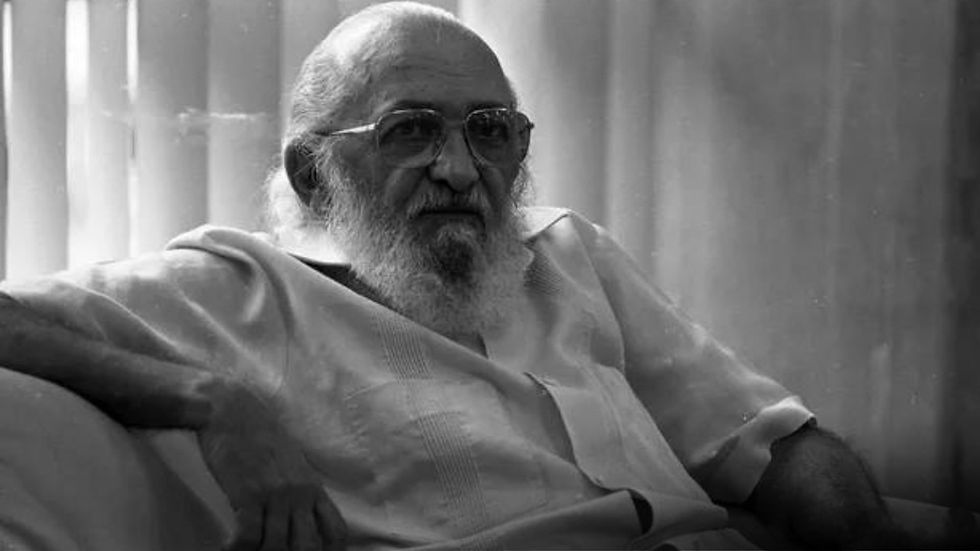
Image via the PCC
By Arnel Medina Cuenca, translated from the Spanish
The recent move by the United States Department of Justice against Army General Raúl Castro Ruz, leader of the Cuban Revolution, calls for a careful look through the lens of International Law, revealing the complete absence of any legal foundation for this action. This isn’t a legitimate judicial process at all, but rather an unacceptable case of extraterritorial overreach, a blatant breach of international law, and a crude attempt to undermine the sovereignty of the Cuban homeland.
This so-called "accusation", lacking any legitimacy or jurisdiction, is nothing more than a blatant act of political provocation aimed at twisting the truth about what happened on February 24, 1996, when our Homeland stood firm in defending its sovereignty against interference from the terrorist group known as Brothers to the Rescue.
Contrary to the false narrative pushed by the empire, which tries to present this Miami-based subversive group as a so-called "humanitarian" organization, history and documented evidence reveal an undeniable truth: Brothers to the Rescue was committed to carrying out hostile provocations against Cuba.
The illegality of extraterritoriality and lack of jurisdiction
From a strictly legal point of view, the Government of the United States lacks any legitimacy and jurisdiction to prosecute a citizen and leader of another sovereign country for actions taken in the course of the protection of its own territory. This accusation is legally fraudulent because it has no legal, political or moral basis whatsoever. The attempt to apply US laws extraterritorially to try a foreign leader is an aberration that ignores the principle of sovereign equality among states. As President Miguel Díaz-Canel has stated, it is a "political action, without any legal basis."
Self-defense and the protection of international law
The attempt to criminalize the events of February 24, 1996 deliberately and dishonestly omits the objective legal framework that protected the actions of the Cuban State. Cuba's response to the repeated incursion into its airspace by aircraft operated by the terrorist organization Brothers to the Rescue constituted an irrefutable "act of self-defense." This protective action was fully protected by the United Nations Charter, the 1944 Chicago Convention on International Civil Aviation, and the customary principles of air sovereignty and proportionality.
The documentary and diplomatic evidence leading up to the event is overwhelming and shows that all peaceful options had been exhausted. Between 1994 and 1996, the Cuban Government filed multiple formal complaints with the State Department, the U.S. Federal Aviation Administration (FAA) and the International Civil Aviation Organization (ICAO), detailing the more than 25 serious and deliberate violations of our airspace in open violation of international law. In the face of U.S. government inaction and complicity, Cuba issued public and official warnings — conveying warning messages directly to then-U.S. President Bill Clinton — indicating that any unauthorized aircraft would be intercepted and, if necessary, neutralized. Using force was, therefore, a lawful step to protect national sovereignty against hostile provocations in the public sphere.
Demand for respect for international norms
The prosecution of a statesman and historic leader of the Revolution of another sovereign State is not an act of justice, but a serious breach of diplomatic norms that puts the very foundations of global institutions at risk. As our Foreign Office has warned, this infamous indictment is part of the troubling U.S. habit of using indictments like this to justify military action against sovereign states, turning its justice system into a tool for armed aggression.
As the Deputy Minister of Foreign Affairs of our country, Carlos Fernández de Cossío, has stated, this spurious process against our Leader of the Revolution is fraudulent, without any legal or moral basis. It’s part of the troubling pattern of the United States using such accusations as a pretext for military action against sovereign states, creating false justifications to legitimize aggression and enforce collective punishment on the island by tightening the devastating blockade.
Cuba has repeatedly assured the global community of its commitment to peace and its unwavering determination to exercise the inalienable right to self-defense recognized by the United Nations Charter. It calls for an immediate stop to the misuse of U.S. judicial institutions and insists on full respect for international law and the sovereignty of all nations. No spurious ruling or coercive measure will be able to break the unshakable will of our people to defend their Homeland and their Socialist Revolution.
In the face of so much imperial manipulation, it is up to us to denounce it and urge the international community and people of goodwill to take a stand, just as various governments, political parties, social movements, and figures from around the world have already done.
This new wave of aggression hits a country that refuses to surrender. Today, the Cuban people strongly reaffirm their steadfast commitment to defend their Homeland and Socialist Revolution, offering their full and unwavering support to Army General Raúl Castro Ruz, leader of the Cuban Revolution. Any attempt by imperialism to bring us to our knees will always be met with our heroic resistance.
Arnel Medina Cuenca is a Doctor of Sciences and Professor at the Faculty of Law of the University of Havana
This work was translated and shared via a License CC-BY-NC


Comments